
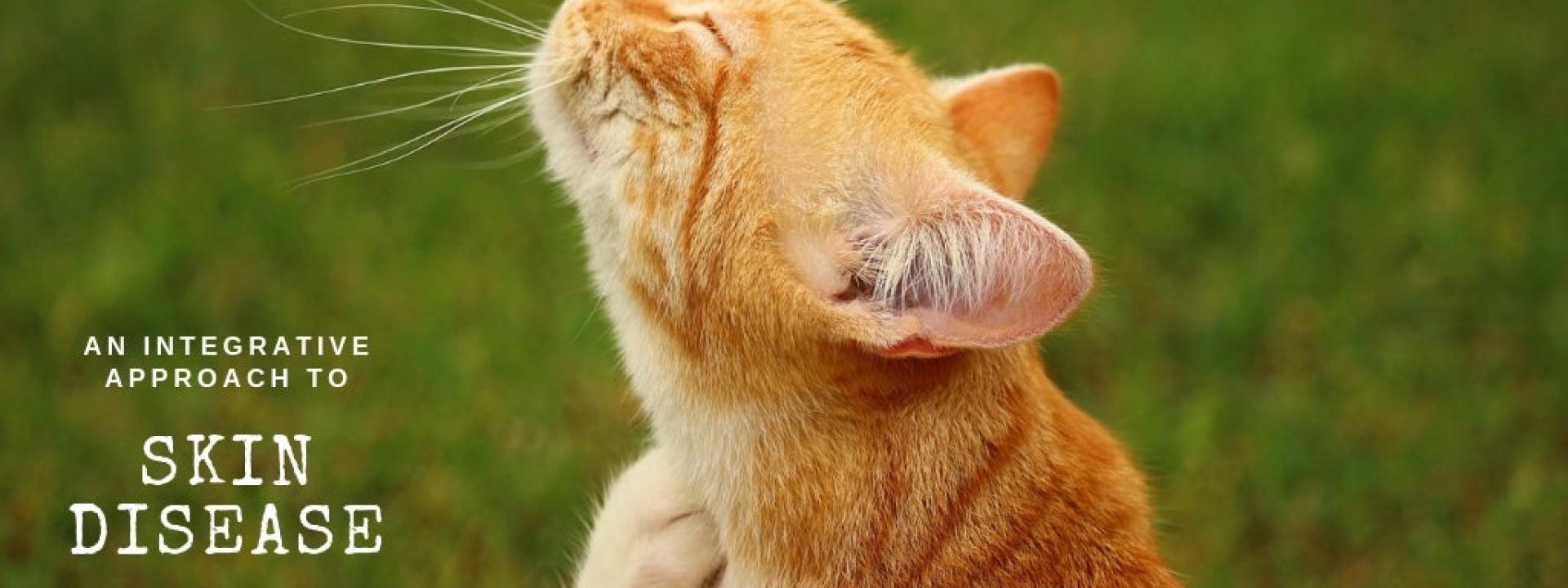
Why Is My Cat Always Scratching? A Green Bay Vet’s Guide to Feline Skin Allergies
By Dan Gray, DVM — Gentle Vet Animal Hospital, Green Bay, Wisconsin
The owner had chalked it up to dry winter air. Her cat, an indoor tabby she’d had since kittenhood, had been scratching around his neck and ears for the better part of three months. She’d combed through his fur looking for fleas twice. Nothing. Tried a flea collar from the pet store. Still nothing. By the time she brought him in to see us, he had a quarter-sized bald patch behind one ear and was licking his belly raw every night.
Sound familiar? Skin allergies are one of the most common reasons cats visit us here at Gentle Vet — and they are also one of the most misunderstood. Most owners arrive expecting a simple answer. What they get instead is a more complicated story involving an overactive immune system, a diagnostic process that requires some patience, and a treatment plan that may need to evolve over time.
The good news is that the vast majority of allergic cats can get real relief. Here is what you need to know.
The Signs Are Easy to Miss — Until They’re Not
Cats are stoic in ways that dogs simply are not. A dog in discomfort is obvious about it. A cat in discomfort quietly grooms more, sleeps in different spots, and avoids contact — until the problem has been going on long enough that the evidence becomes impossible to ignore.
The most common patterns we see in allergic cats include scratching around the head, neck, and ears; overgrooming or relentless licking of the belly, inner thighs, and forelegs; and hair loss from pulling fur out — a behavior called barbering that cats almost always do in private. One of the sneakiest presentations is symmetric thinning on the belly or inner legs. Owners regularly tell us they thought their cat just had a thin coat in those areas. In reality, the cat had been pulling it out for months.
Other signs include tiny scabby bumps scattered across the back and neck — a pattern called miliary dermatitis that feels like sandpaper under your fingers — raised or oozy sores on the skin, sores near the lips, recurrent ear infections, and skin that looks raw or inflamed from repeated trauma. None of these symptoms points definitively to allergies on its own. That’s what makes the diagnostic process so important.
|
Rare but worth knowing: Severe allergic reactions (anaphylaxis) can occur in cats, though it is uncommon. Sudden facial swelling, difficulty breathing, collapse, or extreme low energy after exposure to a new substance warrants emergency veterinary care immediately. |
Three Causes — and Why Many Cats Have More Than One
Veterinary dermatologists use the term Feline Atopic Skin Syndrome (FASS) to describe the spectrum of allergic skin disease in cats. It covers three main triggers, and understanding which one — or which combination — is affecting your cat is the entire point of the diagnostic process.
Flea allergy dermatitis is the most common of the three. What surprises most owners is that you do not need a flea infestation to trigger it. A cat that is sensitized to flea saliva can develop intense, whole-body itching from a single bite. And because allergic cats groom so aggressively, they remove fleas from their coat almost immediately after being bitten. You will rarely find the culprit even when flea allergy is the primary problem — which is precisely why we run a flea prevention trial as a standard first step, even in cats where no fleas are found.
Environmental allergies work similarly to hay fever in people. Pollens, mold spores, and dust mites float through the air, settle into bedding and carpet, and get absorbed through the skin. Wisconsin seasons matter here: some cats flare every spring when tree pollen peaks, every fall when ragweed surges, or both. Others have year-round symptoms because dust mites are a constant presence regardless of the season. Most affected cats show their first symptoms by age three.
Food allergies are less common than the other two, but they do happen. Cats develop sensitivities to proteins they have eaten repeatedly over time — most often chicken, beef, or fish. Because food allergens are consistent regardless of the season, food allergy tends to produce itching that never fully resolves, never gets clearly better or worse, and does not respond to standard allergy treatments. That pattern is the tell.
One important reality: many cats have more than one type of allergy simultaneously. A cat with flea allergy and environmental allergies might be manageable with good flea control alone — until spring arrives and the pollen load pushes them over the threshold. Working through each piece systematically is the only reliable way to understand the full picture.
How We Figure Out What’s Actually Going On
There is no single test that diagnoses allergies in cats. What we have instead is a logical, stepwise process — and most of it can happen right here in our clinic without sending samples out and waiting.
We start every itchy cat workup by ruling out things that look like allergies but are not. Ringworm, mange mites, and bacterial or yeast skin infections can all produce itching, hair loss, and inflamed skin. Our in-house skin cytology lets us collect a quick sample from the skin surface and examine it under the microscope on the same visit — identifying bacterial or yeast overgrowth that may be worsening the itch, or that may be the whole problem. We also offer in-house fungal testing for ringworm.
Hormone imbalances are another important mimic. Thyroid and adrenal disorders can produce skin and coat changes that look strikingly like allergies. We offer endocrine testing in-house to rule out hormonal causes before committing to an allergy diagnosis and treatment plan.
Once infections and hormonal causes are off the table, flea control comes next. We carry Selamectin — available as Revolution or Selarid depending on what allows us to keep costs down for you — and a 4 to 6 week therapeutic flea trial may be tried for any itchy cat, regardless of indoor/outdoor status. If itching improves meaningfully, we have found at least part of the answer.
For cats with year-round itching or itching that does not respond to flea control, we recommend an elimination diet trial. We stock Hill’s Prescription Diet z/d in the clinic — a hydrolyzed protein diet where the proteins are processed down to a molecular size too small for the immune system to recognize. The trial runs 8 to 12 weeks, during which the cat eats nothing else. This is not optional fine print: a single treat, a bite of another pet’s food, or an over-the-counter “limited ingredient” diet can invalidate months of work. Independent testing has found widespread protein contamination in many OTC limited-ingredient diets, which is why we use veterinary-exclusive prescription formulas only. Additional prescription diet options beyond z/d are available through our online pharmacy or by special order.
When fleas and food have both been addressed and itching persists, environmental atopic dermatitis is the working diagnosis. At that point, we can draw blood for allergen-specific IgE testing — a panel that identifies your cat’s immune reactivity to regional Wisconsin allergens including tree and grass pollens, ragweed, dust mites, mold spores, and more. Results help us design a customized immunotherapy program specific to your cat. For cases with unusual skin changes or presentations that are not responding as expected, a skin biopsy allows a veterinary pathologist to examine the tissue directly and help confirm what we are dealing with.
Testing available at Gentle Vet:
|
Test |
What It Tells Us |
|
Skin Cytology |
Rapid in-house microscopy to identify bacterial or yeast overgrowth contributing to the itch |
|
Fungal Testing |
In-house ringworm culture and fungal evaluation — faster than outside lab turnaround |
|
Skin Scraping |
Rules out mange mites (Demodex, Notoedres) as the source of skin irritation |
|
Endocrine Testing |
Rules out thyroid and adrenal hormone disorders that mimic allergic skin disease |
|
Blood Allergy Testing (Heska / Antech) |
Allergen-specific IgE panel for regional Wisconsin pollens, dust mites, mold spores — guides immunotherapy design |
|
Skin Biopsy |
For atypical or non-responsive cases; pathologist-reviewed tissue diagnosis |
Our full diagnostics capabilities are described at thegentlevets.com/services/pets/diagnostics.
What Treatment Actually Looks Like
Feline skin allergies are not curable. That is the honest answer, and we would rather say it up front than let you discover it mid-treatment. What is possible — and what we achieve regularly — is meaningful, sustained control. Many cats go from genuinely miserable to comfortable with a plan that is built around what they specifically need.
Year-round flea prevention is non-negotiable for any cat with confirmed or suspected flea allergy, and we recommend it broadly for allergic cats regardless of indoor status. Wisconsin winters do not eliminate fleas; they overwinter indoors on animals and in carpeting. We carry Selamectin (Revolution or Selarid) and price it as competitively as we can. A single missed month can set off a flare that takes weeks to resolve.
If food allergy is confirmed, Hill’s z/d becomes the long-term diet. We carry it in the building — no wait, no special order. Cats who respond to the elimination trial typically stay on the prescription diet indefinitely, since reintroducing the offending protein will reliably restart the cycle. If you want other options they are available through our online store
For acute flares and short-term relief, corticosteroids like prednisolone work quickly and are entirely appropriate when a cat is really suffering. For cats who need more than occasional steroids, we prefer to transition to options with a better long-term safety profile. Cyclosporine (Atopica for Cats) is our primary long-term tool — it is FDA-approved for feline allergic skin disease, and clinical studies show over 78% of treated cats improving meaningfully. It works by calming the overactive immune response specifically, rather than broadly suppressing immunity. It comes as a daily liquid and can often be tapered to every other day once symptoms are controlled.
We also offer Apoquel (oclacitinib) for selected cases. It is FDA-approved for dogs and used off-label in cats — most often when other options have not provided adequate control, or when steroids are not appropriate, as in cats with diabetes. Whether Apoquel is the right fit for your cat is a conversation we will have based on their individual history and response.
Allergen-specific immunotherapy — allergy shots or sublingual drops formulated from your cat’s Heska panel results — is the only treatment that works by changing how the immune system responds rather than suppressing it. About half to two-thirds of cats improve after one to two years of immunotherapy, and many can eventually reduce or eliminate daily medications. It is a commitment, and it is not for every cat or every household, but for cats with serious year-round disease it offers the most durable long-term relief.
One detail that often gets overlooked: secondary bacterial skin infections. Damaged skin lets bacteria in, infections amplify the itch, and those cats can look like they are failing treatment when they are actually just infected. Our in-house skin cytology lets us catch and treat infections at the same visit rather than discovering them weeks later. Supportive care — omega-3 fatty acids, skin barrier sprays, topical wipes — rounds out the plan. Many of these products are available through our online pharmacy. Ordering through our store ensures products come from authorized distributors with full manufacturer guarantees — something third-party retailers cannot provide.
More about our approach to preventive care and parasite control can be found at thegentlevets.com/services/pets/pet-wellness-care and thegentlevets.com/services/parasites.
Between Now and Your Appointment: What Helps
While we sort out the medical side, there are things you can do at home that genuinely move the needle. HEPA air filtration reduces airborne dust mites and pollen — especially important in older Wisconsin homes that do not have the tightest envelopes. Washing your cat’s bedding in hot water weekly eliminates a significant dust mite reservoir. Unscented, low-dust litter and the removal of scented candles and air fresheners reduce respiratory irritants that make skin-sensitive cats more reactive overall.
If you are in the middle of a food trial, the strictness of the protocol is not a suggestion. Everyone in the household — including well-meaning kids and other pets — needs to be on the same page. One shared bite can cost you weeks. Regular brushing removes allergens from the coat and gives you a chance to spot early skin changes before they escalate.
And if your cat is on flea prevention, stay consistent. Missing a month in December because “it’s winter” is one of the most common reasons we see flea-allergic cats relapse. The fleas do not take the month off.
Frequently Asked Questions
Can indoor cats get skin allergies?
They can, and they do — regularly. Indoor environments are rich with dust mites, mold spores, and pollens that drift in through windows and on clothing. Being indoors all the time does not reduce a cat’s allergen exposure as much as most owners expect.
My cat doesn’t have fleas. Why are you recommending flea prevention anyway?
Because cats with flea allergy are so efficient at grooming that they remove fleas immediately after being bitten. You will not find the flea, but the immune reaction to that single bite can last for days. A therapeutic flea control trial with Selamectin is the only way to know whether flea allergy is part of the picture — and skipping it because you do not see fleas is one of the most common reasons allergy cases stay unresolved.
How long does a food trial take, and why can’t I just try a limited ingredient food from the pet store?
A proper food trial runs 8 to 12 weeks. Research shows that 80% of food-allergic cats improve by week six and over 90% by week eight — so shorter trials produce unreliable results. Over-the-counter limited ingredient diets are not appropriate for diagnostic food trials because independent testing has found significant protein cross-contamination in many of these products. We carry Hill’s Prescription Diet z/d in the clinic, manufactured under strict protocols to prevent this. Additional veterinary-exclusive options are available through special order or our online store.
What is the difference between cyclosporine and Apoquel for cats?
Cyclosporine (Atopica for Cats) is FDA-approved for feline allergic skin disease and is generally our first-line choice for long-term daily management. Apoquel (oclacitinib) is FDA-approved for dogs and used off-label in cats — we offer it for cats that have not responded adequately to other options or where steroids are not appropriate, such as in cats with diabetes. Our doctors will walk through which makes sense based on your cat’s history and how they respond.
Will my cat need medication forever?
Possibly, but not necessarily at the same level. Many cats do well on a maintenance plan that is lighter than what they needed initially — especially once secondary infections are cleared, flea control is consistent, and any food component is identified. Allergen-specific immunotherapy, when effective, can reduce or eliminate the need for daily medications over time. The goal is always the lowest level of intervention that keeps your cat comfortable.
How do I know if it’s allergies or something else?
You usually cannot know without a proper workup — which is a feature, not a bug. Ringworm, mange mites, yeast infections, and hormonal disorders can all look like allergies. That is why we start with in-house diagnostics rather than assuming the answer. A systematic approach gives us a real diagnosis rather than a guess.
|
Your Cat Doesn’t Have to Live Like This. If your cat is scratching, overgrooming, or dealing with recurring skin problems, we have the in-house diagnostic tools and the treatment options to help — right here in Green Bay. The sooner we identify what is going on, the sooner we can make your cat comfortable. |
Gentle Vet Animal Hospital
2560 University Ave, Green Bay, WI
(920) 435-5000
Everything in one place: linktr.ee/gentlevetah
Schedule online: my.provet.com/gentle-vet