
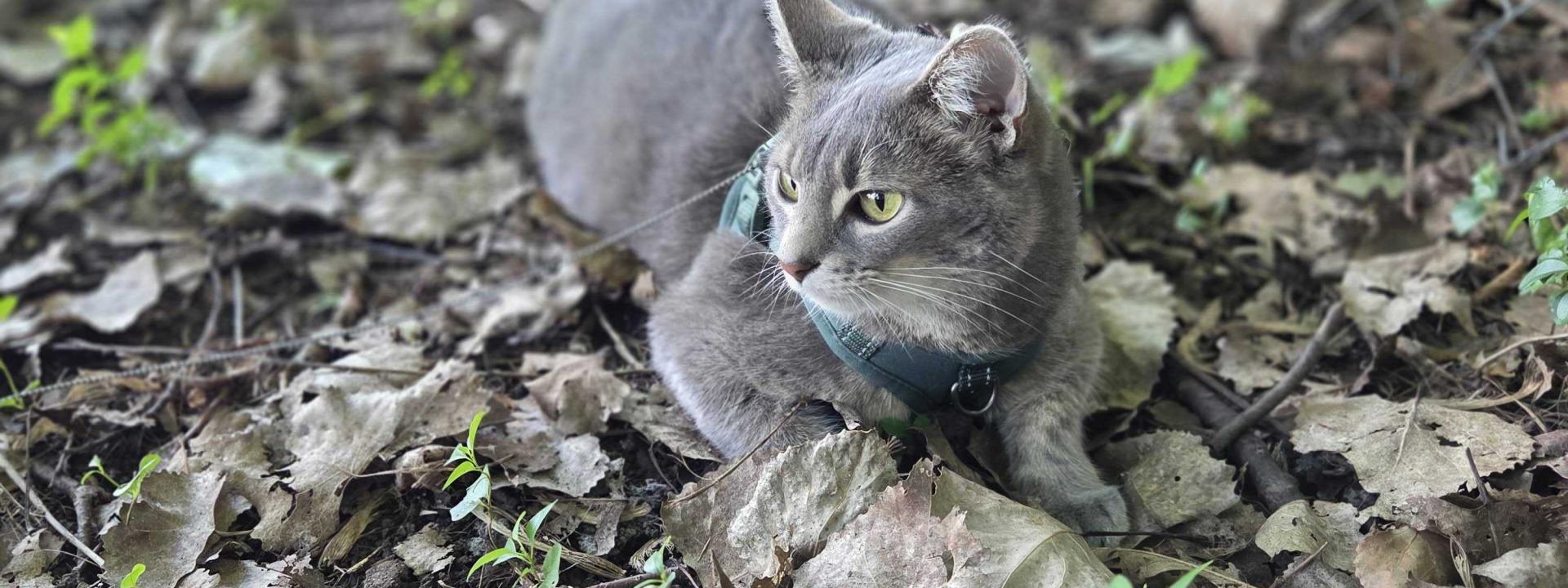
Here at Gentle Vet Animal Hospital, we believe an informed pet owner is an empowered pet owner. And one of the topics we're most passionate about clearing up? Heartworm disease in cats.
Mention heartworm, and most people picture dogs. It makes sense — dogs have historically been the focus of prevention campaigns, and their infections are more straightforward to detect and treat. But the truth about feline heartworm disease is more complicated, and frankly, more sobering. Cats get heartworm too. And when they do, the stakes are just as high — sometimes higher.
Let's walk through the most common myths we hear from cat owners, and set the record straight.
Myth #1: "Heartworm is a dog disease. My cat doesn't need to worry about it."
This is the big one — and it's simply not true. Cats are susceptible to heartworm disease caused by the same parasite, Dirofilaria immitis, transmitted by the very same infected mosquito bite. The mosquito doesn't stop to check whether it's landed on a Labrador or a tabby.
What is true is that cats are less ideal hosts for heartworms than dogs — which means fewer larvae survive to become adult worms, and worm burdens are typically low (often just one to four worms). But here's what surprises many people: a lower worm burden does not mean less danger. In cats, even a single adult worm can cause life-threatening disease.
Research shows that in areas where heartworm is present in dogs, cats are exposed at a meaningful rate. A Florida shelter study found that when both antigen and antibody tests were used together, the overall rate of heartworm exposure in cats was statistically similar to that of dogs from the same region. The disease in cats is real — it's just harder to see.
The bottom line: Heartworm disease is a genuine risk for cats wherever mosquitoes exist — and that includes right here in Green Bay.
Myth #2: "My cat is strictly indoors. She's safe."
We hear this one all the time, and we completely understand why people believe it. It feels logical: if your cat never goes outside, how could a mosquito-borne parasite reach her?
Here's the reality: mosquitoes don't stay outside. They slip through open doors, gaps around windows, and torn screens. Studies have found that approximately 25% of cats diagnosed with heartworm disease were classified as indoor-only pets. One mosquito. One bite. That's all it takes.
The American Heartworm Society is clear: both indoor and outdoor cats are at risk, and year-round prevention is the only way to fully protect them. Green Bay's mosquito season may be shorter than in the Deep South, but our mosquitoes are real — and so is the risk they carry.
Think of it this way: You probably don't skip your cat's flea prevention just because she lives indoors. Heartworm prevention deserves the exact same thinking.
Myth #3: "I'd know if my cat had heartworm — she'd show symptoms."
This might be the most dangerous myth of all, because it creates a false sense of security.
Feline heartworm disease is notoriously difficult to detect. Many infected cats show no symptoms at all — at least not ones that are easy to connect to heartworm. When signs do appear, they often look exactly like other common conditions:
- Coughing or wheezing (frequently mistaken for asthma or bronchitis)
- Difficulty breathing or rapid breathing
- Intermittent vomiting
- Lethargy or decreased activity
- Weight loss or loss of appetite
The condition caused by immature worms dying in the lungs has its own name: Heartworm Associated Respiratory Disease, or HARD. It can look identical to feline asthma on examination, which is why it's so frequently misdiagnosed — and why cats often go untreated far longer than they should.
Perhaps most heartbreaking: some cats show absolutely no warning signs before dying suddenly. Even the death of a single adult worm can trigger a fatal inflammatory reaction in a cat's small pulmonary arteries.
What this means for you: Regular veterinary visits and proactive prevention are the only reliable safeguards — because waiting for symptoms may mean waiting too long.
Myth #4: "If my cat gets heartworm, the vet can just treat it — like they do for dogs."
This is perhaps the most critical distinction between heartworm disease in cats and dogs: there is no FDA-approved treatment for feline heartworm disease.
The drug used to eliminate adult heartworms in dogs cannot be safely used in cats. The risk of a fatal reaction — triggered by the dying worms — is simply too high. In certain cases, surgical removal may be considered if worms are visible on ultrasound, but this carries significant risk.
For an infected cat, care becomes primarily supportive: managing symptoms with steroids, bronchodilators, and anti-nausea medications, and monitoring closely over time. Some cats live with managed heartworm disease for months or years while the infection gradually resolves on its own. Others aren't so fortunate.
Prevention, therefore, isn't just the best option for cats — it is the only option. Safe, effective monthly preventives are available in both oral and topical forms. They work by eliminating infective larvae before they can mature and cause damage. Many also protect against roundworms, fleas, ear mites, and other common parasites.
Good news: Heartworm preventives for cats have an excellent safety record and can be started in kittens as young as six weeks old. The peace of mind is worth every bit of it.
Myth #5: "Heartworm testing isn't necessary for cats."
Diagnosing heartworm in cats is more complex than in dogs — no single test is fully reliable, which is part of why testing rates have historically been low and the disease so widely underestimated. But "difficult to diagnose" is a far cry from "not worth testing for."
The American Heartworm Society recommends testing cats before starting prevention, using a combination of antigen and antibody tests, and in some cases adding radiographs or ultrasound. Because testing limitations mean infections can be missed, your veterinarian's clinical picture — including symptoms, history, and imaging — matters just as much as any individual test result.
Testing also gives us a baseline. It helps us detect and monitor any infection already present, catch respiratory changes early, and make informed management decisions — which can make a meaningful difference in your cat's quality of life over time.
The Bottom Line: Prevention Is Everything
We know it can feel like a lot to keep track of — vaccines, dental health, parasite prevention, wellness visits. But when it comes to heartworm disease in cats, the math is simple: a once-monthly preventive is far less expensive, far less stressful, and far safer than managing an infection that has no cure.
At Gentle Vet Animal Hospital, we're here to make this easy. We'll help you choose the right preventive for your cat's lifestyle and health history, answer every question you have, and make sure your whole family — including the ones with whiskers — is as protected as they can be.
Your cat trusts you. We're here to help you take care of them.
Gentle Vet Animal Hospital
2560 University Ave, Green Bay, WI
(920) 435-5000
Everything in one place: linktr.ee/gentlevetah