How We Gently Handle Your Parrot at Gentle Vet
When you bring your parrot or other pet bird to Gentle Vet Animal Hospital, you’re trusting us with a family member. Proper bird handling and restraint is a medical skill in itself – it keeps your bird safe, allows us to examine and treat them, and reduces fear and stress during the visit. Our approach is based on evidence-based avian guidelines and behavior-focused handling techniques developed for parrots in veterinary settings. (Lafeber Company)
Below is a clear walk-through of what typically happens when we handle your bird, and why we do it this way.
Before We Touch Your Bird
1. We start with history and observation
Before anyone reaches for your parrot, we:
- Take a detailed history (diet, behavior, environment, recent changes, symptoms).
- Watch your bird quietly from a distance in the carrier or cage.
Birds are prey species and often hide signs of illness. Observing them before handling helps us spot subtle issues (changes in posture, breathing, balance, attitude) and decide how much handling is safe. (Lafeber Company)
If your bird appears very weak or having trouble breathing, we may provide supplemental oxygen, warmth, or other supportive care before attempting restraint. In some cases we’ll minimize handling to what is strictly necessary.
Making the Room Safe for a Loose Bird
Before opening your bird’s carrier or cage, we:
- Close all doors and windows.
- Cover windows or mirrors so a frightened bird doesn’t fly into glass.
- Remove or secure obvious hazards (loose cords, clutter, unsafe hiding spots).
- Lay out any equipment we may need (light source, swabs, syringes, slides, etc.) so we don’t have to move around once we’re holding your bird. (Lafeber Company)
This reduces the risk of escape, injury, or panic if your bird startles or takes flight.
How We Invite Your Parrot Out
We do not pull parrots off shoulders or arms. Instead, we:
- Approach calmly and quietly. Sudden movements and loud voices increase stress.
- Keep the towel out of sight at first, especially for birds that may have been handled roughly in the past and react as soon as they see one.
- Offer a hand or perch and ask for a “step up.”
- If your bird is comfortable stepping up at home, we try to use that same cue.
- Once your bird steps up, we:
- Gently hold the middle toes to prevent sudden launch.
- Bring the bird in toward our chest, keeping the beak oriented away from the face (often just under the chin but not pressed). (Lafeber Company)
This approach uses your bird’s existing training whenever possible and reduces the need for “chasing” or grabbing, which can increase fear.
Our Towel Technique (“Bird Burrito” – Done Correctly)
A towel is a safety tool, not a punishment. It protects your bird’s wings and body and protects human hands from beaks and claws.
Once your bird is on a hand or in a safe position:
- We drape a soft, thread-free towel over the back and sometimes over the head. The temporary “hood” can help many parrots feel more secure and reduces visual stimuli.
- For parrots that won’t come out of the cage, we:
- Remove movable items that could injure the bird during capture.
- Use the towel to gently but firmly guide the bird against the cage wall or into a corner.
- Support the body as we bring the bird out, staying in control of the wings and head. (Lafeber Company)
Throughout this process we avoid squeezing the chest. Birds need their chest to move freely to breathe.
How We Support the Head, Neck, Wings, and Body
Once wrapped, safe restraint means firm control with minimal pressure:
- One hand is responsible for the head and neck:
- The palm rests along the bird’s back.
- The thumb and forefinger gently encircle the neck without constricting it.
- For extra control, the “knuckle” of the thumb may sit in the soft area between the lower jaws (the intermandibular space), which helps stabilize the head without twisting. (Lafeber Company)
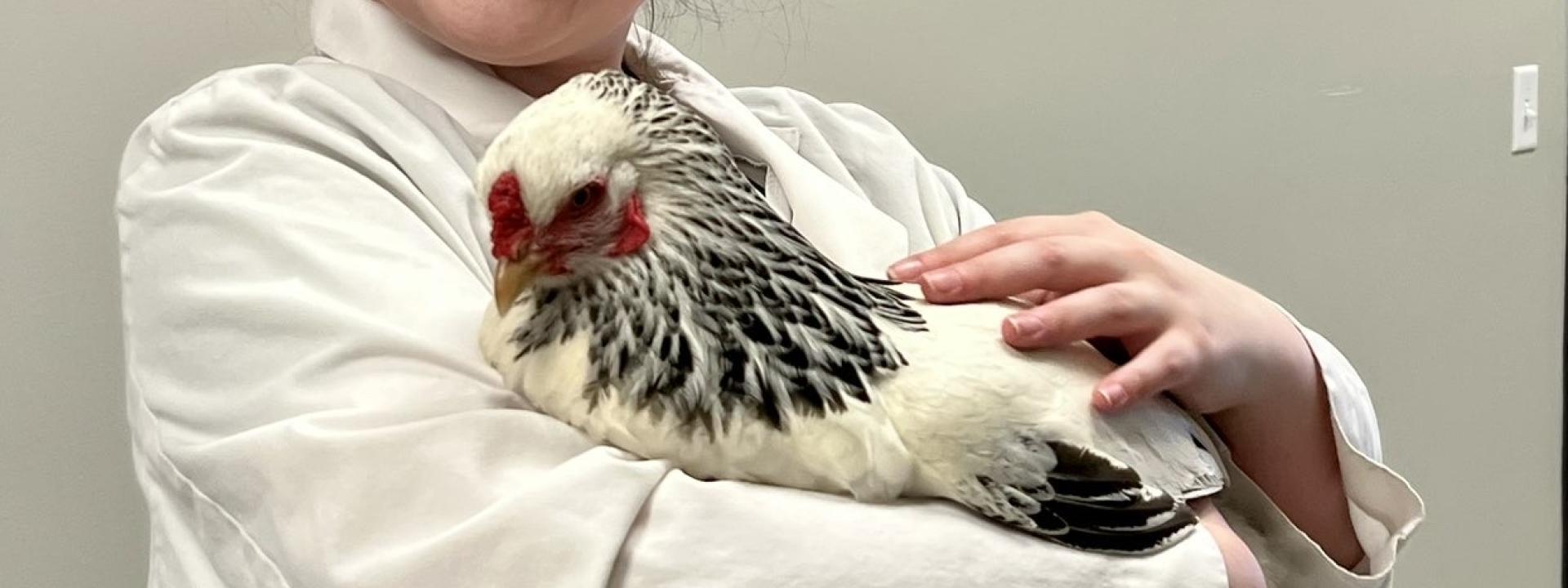
- The other hand supports the torso and wings, usually through the towel:
- Wings are held close to the body so they cannot flap and injure joints or feathers.
- The body is supported from underneath so the bird feels held, not dangling.
We take special care with species that have bare facial patches, like macaws and African greys, because their facial skin can bruise easily if pressed too hard. (Lafeber Company)
Our team is trained to constantly monitor breathing and muscle tone while restraining; if your bird shows signs of distress, we stop and reassess.
Special Handling for Small Birds
Small parrots and other small birds need an even more delicate grip:
- The bird’s back is supported in the palm of the hand.
- The thumb and last two fingers cradle the wings against the body.
- The index and middle fingers control the head and neck.
This “one-handed” technique keeps the bird secure while allowing the other hand (or a second handler) to perform the exam or procedure. (Lafeber Company)
Because small birds fatigue and overheat more quickly, handling time is kept as short as possible.
What You May Notice During Your Bird’s Visit
During a typical visit with our avian veterinarians in Green Bay, you may see:
- Your bird stepping up, then being toweled and gently “burrito-wrapped.”
- One team member focused solely on holding your bird, while another performs the exam, obtains samples, or gives medication.
- Short breaks in handling if your bird is breathing harder or appears stressed.
- Occasional use of mild sedation for birds that are extremely fearful or for complex procedures, always under a veterinarian’s direction and monitoring. (Lafeber Company)
You may also notice what you don’t see:
- We avoid chasing birds around the room whenever possible.
- We do not pry birds off shoulders.
- We don’t allow unnecessary staff or noise in the room during restraint.
All of this is intentional, designed to lower fear, anxiety, and stress while still allowing us to give thorough medical care.
Why Proper Parrot Handling Matters
Appropriate parrot handling and restraint:
- Reduces the risk of injury to your bird’s wings, chest, spine, and facial skin.
- Allows us to safely examine the mouth, eyes, ears, and body.
- Makes blood draws, imaging, and treatments safer and faster.
- Helps prevent fear-based aggression and long-term behavior problems associated with rough handling. (Lafeber Company)
Our handling protocols at Gentle Vet are modeled on published avian veterinary guidelines and behavior-based handling principles used internationally in avian practice. (Lafeber Company)
When to Call Us
If your parrot or other pet bird:
- Seems sick, weak, or is breathing with effort,
- Has experienced trauma or a fall,
- Is showing new behavior changes (sudden aggression, quietness, fluffed feathers),
- Or is due for an annual avian wellness visit,
we recommend an exam with an avian-experienced veterinarian.
📞 Call us: (920) 435-5000
📧 Email: [email protected]
📱 Follow us on Facebook and Instagram for more avian health tips from our Green Bay team.