
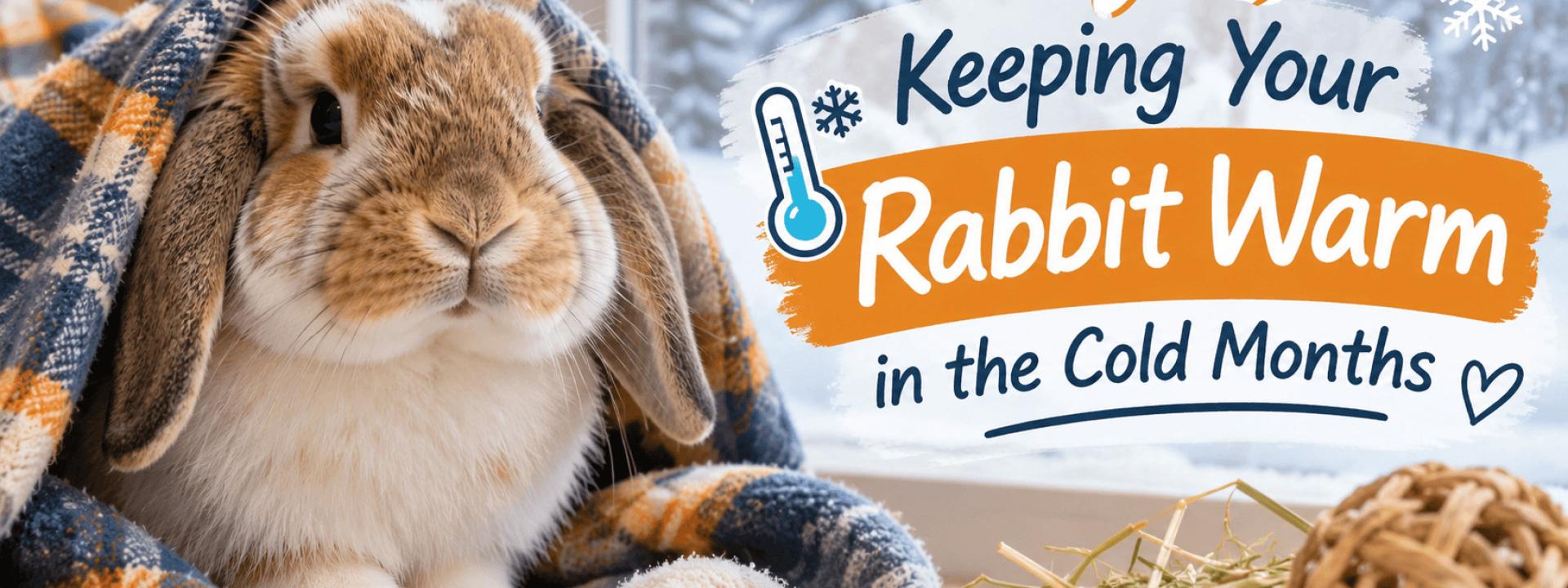
Rabbits handle cold better than most people expect. They also hide illness better than most people expect, and winter is where those two facts collide. A rabbit that looks fine at dusk can be in serious trouble by morning, and the cold usually takes the blame for something that started days earlier.
Here is what we tell rabbit owners in Green Bay, De Pere, and Ashwaubenon every fall: how cold is too cold, what a safe winter setup looks like indoors and out, and which quiet changes mean your rabbit needs a veterinarian before the weather ever becomes the problem. Gentle Vet cares for rabbits and other small mammals, and the answers below come from that experience.
How Cold Is Too Cold for a Rabbit?
There is no single number, because shelter, wind, hair coat, age, and health all change the answer. The references do agree on direction: rabbits cope with cold far better than they cope with heat. The Merck Veterinary Manual’s rabbit housing chapter says rabbits tolerate subzero temperatures when provided proper shelter, gives an optimal range of 61° to 72°F, and warns that rabbits are prone to heat stroke. Merck’s owner-facing page adds that long exposure above 80°F can make a rabbit sick.
“Rabbits are pretty resilient to the cold. When we get a cold-stressed rabbit that has truly allowed its body temperature to drop, that means there is something very seriously wrong with the patient.”
— Dr. Dan Gray, Gentle Vet
The rabbit’s cold tolerance has a practical side for indoor homes. Rabbits do not want the same warmth people do, so turning up the thermostat or piling on heat sources usually solves a problem a pet rabbit does not have.
Some references take a more cautious line. The same Merck owner page says domestic rabbits do poorly below 50°F and recommends moving outdoor rabbits inside during temperature extremes. Both statements can hold. A rabbit with a dry, wind-protected shelter, deep bedding, and unfrozen water copes with cold that would hurt a rabbit without those things, and the outdoor section below covers what that setup looks like and when we suggest bringing a rabbit inside.
Is the Cold Really the Problem? What We See in Winter Rabbits
Usually not, at least not by itself. In our experience, cold weather rarely starts the trouble. A rabbit becomes sick with something else, such as gastrointestinal stasis (a slowdown of the gut), pneumonia, or a respiratory infection, and then the cold becomes more than that rabbit can handle. Veterinary teaching hospitals describe stasis the same way: the University of Illinois veterinary team calls it always secondary to an underlying cause such as illness, pain, stress, or an inappropriate diet.
“Most of the time it’s not the cold. It is an underlying disease that is still undiagnosed when people interpret it as cold stress.”
— Dr. Dan Gray, Gentle Vet
Body temperature is the part that deserves respect. A study of 316 client-owned rabbits hospitalized at an exotics-only animal hospital found that rabbits arriving with a low body temperature were about three times as likely to die before or within one week after leaving the hospital, and each 1°C (1.8°F) drop in temperature roughly doubled the odds of death (Di Girolamo et al., Journal of the American Veterinary Medical Association, 2016). Those rabbits were sick for many reasons, not only cold exposure. The study therefore matches what we see in the exam room: a falling temperature tells us a rabbit is losing ground, whatever started the problem. When we see a rabbit’s internal body temperature drop, we start warning owners that the patient could die at any moment.
Winter cases are also rarer in our exam rooms than most people expect. Rabbits kept outdoors are usually either fine or found suddenly gone, so the rabbits we see tend to be indoor house rabbits who are watched closely. The gap between what owners see at home and what reaches us is a large part of why misconceptions about winter rabbit care persist.
Which Symptoms Matter More Than the Weather?
Gastrointestinal stasis and respiratory infections build through small changes over days, which makes them hard to catch. Outdoor rabbits are the hardest, because an owner may see a hutch rabbit once or twice a day and may not spot a trend. Owners of indoor rabbits usually notice sooner.
The changes to catch are an appetite that drops off, droppings that shrink or disappear, and any shift in behavior. If a rabbit normally hops out of its house to greet you at feeding or cleaning time and then stops, pay very close attention, because the change can be the only clue you get. The University of Illinois guidance lists not eating or eating less for more than four hours, refusing treats, and reduced droppings among the symptoms of stasis, and stasis can become life-threatening quickly when untreated.
|
Cold to the touch, limp, or shivering: go now Any one of these three is a red flag. Call Gentle Vet at 920.435.5000 and start for the clinic as quickly as you safely can. If you have a couple of minutes while you get ready, warm a towel in the dryer and wrap your rabbit in it. Be careful with hair dryers, which can get hot enough to burn. First aid buys time; it does not replace a vet visit, so do not wait for it to work before you leave. At the clinic, we can use a controlled-heat bed warmer, such as a BedJet, to bring a rabbit’s temperature up safely. After hours, VEG Emergency Vet in Bellevue (920.308.3981) sees rabbits. BluePearl Fox Valley in Appleton (920.993.9193) sometimes does, depending on which doctor is on service, so call ahead and ask. Both are listed on our Emergency Care page. |
When a rabbit does come in, warming the patient is only the first step. A nose-to-tail exam comes next, followed by diagnostics such as bloodwork and X-rays when they are needed to find the underlying cause, whether that is a respiratory infection, a slowdown of the gut, or pain from arthritis. X-rays that show spinal arthritis can explain why a rabbit keeps getting stasis.
What Should Winter Look Like for an Indoor Rabbit?
Most of the rabbits Gentle Vet sees live indoors, and for them winter mostly comes down to stability. Keep the room temperature steady and the hair coat clean and fluffy, because matted fur cools a rabbit faster. Food and water should never run out.
Heat Sources: Fewer Than You Think
Skip anything corded. A heating pad in a rabbit’s space brings two problems: the shock risk of a chewed cord, and a heat source the rabbit may not be able to leave. A heat lamp is rarely necessary either. The main exception is keeping an outdoor water supply from freezing, and even then the rabbit needs a clear path away from the light to a spot at room temperature, so the rabbit can decide how warm or cold to be. If a rabbit is injured, or has advanced arthritis or another problem that limits movement, do not use a heat lamp at all.
Drafts: Overstated, With One Exception
In our experience, warnings about drafts are overstated. Merck’s discussion of snuffles points elsewhere: the disease occurs when a rabbit’s resistance is low, and Merck lists inadequate ventilation, sanitation, and nesting material as predisposing factors for pneumonia, with the number of cases rising in step with ammonia in the cage or hutch. A healthy rabbit in a normal indoor setup can tolerate some air movement. Sealing a space up tight to keep it warm can backfire, because stale, ammonia-heavy air is a bigger respiratory risk than a cool breeze.
“It’s like going out in the cold without your hat on. That is not going to result in respiratory illness. But if your immune system is already weakened and you’re stressed, the cold can be the tipping point. It is not the direct cause.”
— Dr. Dan Gray, Gentle Vet
Should Any Rabbit Stay Indoors All Winter?
Some rabbits are better off inside. Smaller rabbits tend to feel temperature changes sooner, though that is a generalization with all the usual limits. Rabbits with pneumonia, a tendency toward gastrointestinal stasis, matted fur, or arthritis are the ones we would keep indoors. Cold makes arthritis more uncomfortable, and spinal arthritis is common in rabbits and easy to miss. If a rabbit is going to live indoors, commit to it for the whole winter.
How Do You Keep an Outdoor Rabbit Safe in a Wisconsin Winter?
Most pet rabbits live indoors now, and we rarely see rabbits kept outside full time. Outdoor housing can still be appropriate when the owner manages it correctly, and it becomes inappropriate when the owner is unable or unwilling to.
Water That Stays Liquid
Water must not be allowed to freeze. Rabbits that make their own heat from body reserves need more water in cold weather, so a bowl or bottle frozen solid overnight turns a cold night into a medical problem quickly.
Wind, Floors, and Fresh Air
Cold alone is manageable. A rabbit cannot be expected to do well with direct exposure to significant cold and significant wind together, because in sub-freezing weather wind chill can contribute to cold-related death. A mild draft in an indoor enclosure is a different situation from a howling winter wind.
Check the floor, too. Many outdoor hutches have wire mesh floors, and wire does not block wind. A three-sided shelter, or even a four-sided hutch with a small door, still lets wind blow up through an open grated floor, and the rabbit never fully warms up. A solid floor with enough bedding to insulate fixes that. Block the wind but keep air moving, and replace wet bedding, since ammonia from damp bedding is a respiratory hazard.
Fur and Fuel
A clean hair coat works as insulation. Matted fur makes a rabbit lose heat faster, so grooming matters more in winter than any accessory. Rabbits also burn more calories and drink more water when they make heat from their own reserves, which means food and water cannot run out, and most rabbits need more of both in cold weather.
When Should an Outdoor Rabbit Come Inside?
A cold forecast alone is not the deciding factor for us. If a rabbit can get out of the wind and the rest of the setup is intact (water that stays open, a solid insulated floor with bedding, and plenty of food and water), we do not necessarily recommend moving the rabbit indoors, even in very cold weather. If an owner cannot provide a windbreak, a solid floor, or water that stays unfrozen, then yes, we suggest moving the rabbit inside.
Pick One: In All Winter or Out All Winter
Choose a plan at the start of winter and keep it. Rabbits allowed to adjust to outdoor temperatures are significantly more comfortable. In a laboratory study, rabbits held at 4°C (39°F) for 10 days increased oxygen use and heat-producing enzymes in their skeletal muscle, which is the main place rabbits make body heat (Arruda et al., Endocrinology, 2008). Moving a rabbit between a cold hutch by day and a warm house at night gives the body little chance to make that adjustment. The study did not test a daily in-and-out routine, so treat our rule as clinical judgment supported by the biology rather than a trial result.
“The simple way is to pick one. They are either in all winter or out all winter.”
— Dr. Dan Gray, Gentle Vet
Winter Rabbit Care: Frequently Asked Questions
How cold is too cold for rabbits?
No single temperature applies to every rabbit. Veterinary references say rabbits tolerate subzero temperatures when they have proper shelter, with an optimal range of 61° to 72°F, and that heat is a bigger risk than cold. Shelter, wind, hair coat, age, and health change the answer. Sub-freezing temperatures combined with strong wind are the combination to avoid.
Can rabbits live outside in Wisconsin winters?
Yes, when the setup is handled correctly. Gentle Vet looks for water that does not freeze, protection from wind, a solid insulated floor with bedding, a clean fluffy hair coat, and extra food and water. If an owner cannot provide a windbreak, a solid floor, or water that stays unfrozen, we suggest keeping the rabbit indoors. Pick one plan for the whole winter, indoors or outdoors, rather than moving a rabbit back and forth.
Do rabbits need a heating pad or heat lamp in winter?
Usually not. Gentle Vet does not recommend corded heating pads because a chewed cord can cause a shock. A heat lamp is rarely necessary except to keep water from freezing, and only if the rabbit can move away to room temperature. Do not use a heat lamp for a rabbit with an injury or arthritis that limits movement.
Are drafts bad for rabbits?
In our experience, a mild draft in an indoor enclosure rarely causes illness in a healthy rabbit. Respiratory disease in rabbits tends to occur when resistance is low, and poor ventilation, sanitation, and dirty or damp bedding are larger factors. Outdoors, cold combined with strong wind is a different and more dangerous situation.
What are the symptoms of a rabbit that is too cold or sick in winter?
A rabbit that is cold to the touch, limp, or shivering needs a veterinarian immediately. Earlier and quieter symptoms include eating less, fewer droppings, and behavior changes, such as not coming out to greet you at feeding time. A rabbit that has not eaten for more than four hours should be seen promptly.
What should I do if my rabbit feels cold?
Call Gentle Vet at 920.435.5000 and head to the clinic right away. While you get ready, wrap your rabbit in a towel warmed in the dryer, and be careful with hair dryers because they can burn. Warming at home buys time but does not replace an examination.
Bring Your Rabbit In Before the Hard Freeze
A nose-to-tail exam this fall is the easiest way to find what the cold would otherwise expose: sore joints, a hair coat that is hard to keep clean, or a rabbit eating a little less than anyone has noticed. Gentle Vet’s exotic pet team would rather spend an appointment teaching you what to watch for than treat an emergency in February. Bring photos of your rabbit’s enclosure, bedding, and water setup so we can check the details together, and ask about wellness and preventive care while you are here.
Gentle Vet Animal Hospital
2560 University Ave, Green Bay, WI
(920) 435-5000
Everything in one place: linktr.ee/gentlevetah
Schedule online: my.provet.com/gentle-vet