
Why Is My Reptile Eating Less This Fall? Brumation or Illness?
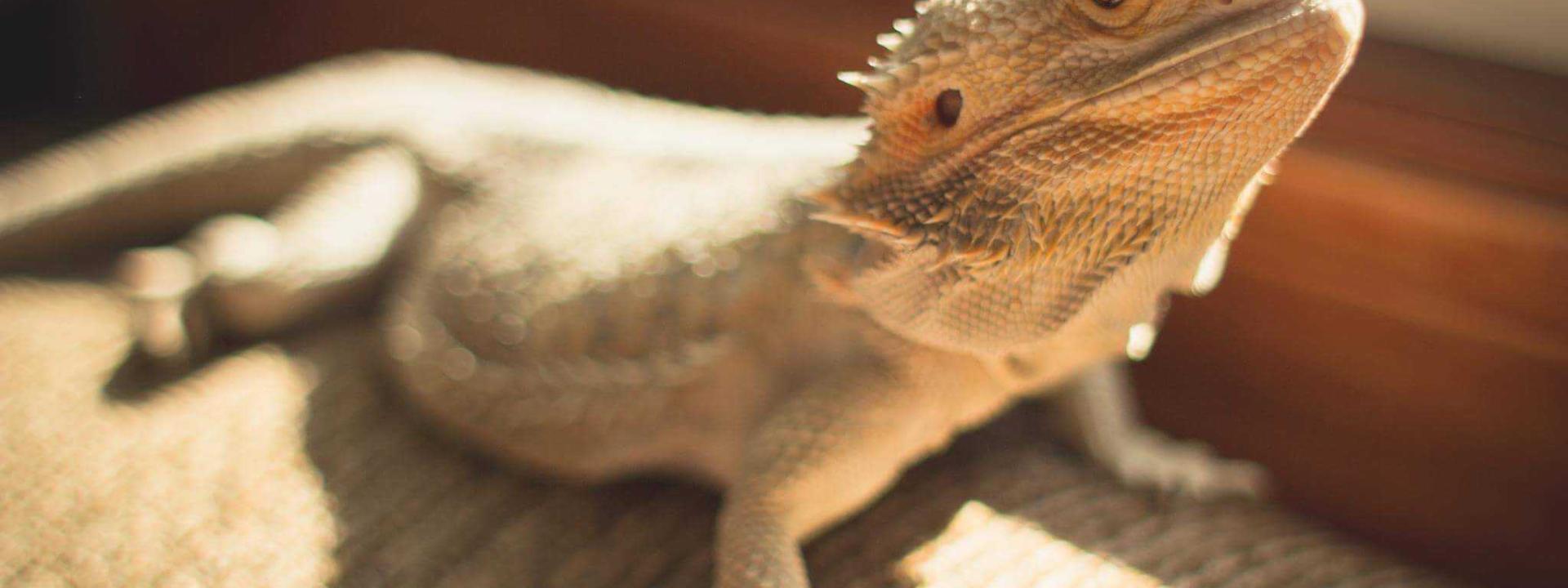
It’s October, and your bearded dragon has barely touched his crickets in two weeks. The heat lamp is on, the water dish is full, and he’s sitting exactly where he sat yesterday. Is he settling into a winter slowdown, or is something wrong?
That question is hard even for our veterinarians, and reptiles are a regular part of our practice. Brumation, the reptile version of hibernation, is a normal seasonal slowdown, and a brumating reptile can look a lot like a sick one. What follows: what brumation really is, what you can check at home, what we look for at an exam, and the point where waiting stops being a plan. Bearded dragons, blue-tongued skinks, and ball pythons are the species where we have the most serious questions about brumation versus illness.
What Is Brumation, and Does Your Reptile Need It?
Brumation is a stretch of reduced activity and slower metabolism that many reptiles go through in winter. Unlike true hibernation, a brumating reptile keeps some activity and may even seek water to drink, according to VCA Animal Hospitals. In the wild, cold is the trigger: VCA describes Australian bearded dragons brumating from May to August, when nighttime temperatures fall to the low 40s Fahrenheit.
Laboratory work shows how tightly activity follows temperature. According to PubMed, a 2024 study in the Journal of Biological Rhythms found that cooling bearded dragons to 4°C (about 39°F) stopped their movement completely (DOI: 10.1177/07487304241273190). That temperature is far colder than any pet should ever be, but the result shows how strongly temperature drives a slowdown.
The misconception we hear most is that brumation is required. It isn’t. Not every reptile brumates, and as far as Dr. Gray can tell, the only time a winter cool-down is truly required is for breeders. Brumation is also one of nature’s population controls, because a significant percentage of the animals that specifically hibernate never wake up again. “So it’s not something in our pets we have to force,” he says. VCA’s guidance on inducing brumation is to have a knowledgeable reptile veterinarian check your bearded dragon’s health first. Most owners who come in worried about a sluggish reptile are relieved to hear that brumation can be completely normal.
How Can You Tell Brumation From Illness?
The short answer is that it’s difficult, and sometimes nobody can tell without time and testing. Here is how Dr. Gray describes the problem:
|
“With proper husbandry, which we’ve verified repeatedly, you get a decrease in energy level and appetite, and that’s appropriate. A lot of times it’s brumation. But it’s very difficult to tell the difference between a normal brumating animal and a sick animal. It can be very frustrating.” — Dr. Dan Gray, Gentle Vet |
Husbandry means your reptile’s whole setup: enclosure, heat, lighting, humidity, and diet. When the setup checks out, a slowdown is more likely to be normal. When the setup has slipped, loss of appetite is more likely a problem, and the next section covers what to check.
The First Question We Ask
When a reptile comes in because it is eating less, our first question isn’t about food. We ask whether your reptile is normally active, whether its color looks normal (general darkening is one thing we watch for), and whether it’s acting different in other ways too. A reptile that eats less but still looks and acts like itself is in a very different spot from one whose behavior or color has changed.
The Poke-and-Prod Test
Dr. Gray’s favorite home check takes a few seconds. Gently touch your reptile and watch what happens:
|
“My favorite is the poke and prod test. If they’re able to respond and almost look sleepy, like you bothered them, then they’re probably fine. If they’re not responding normally, or not responding at all, that makes me lean more toward illness than brumation. But it’s always a judgment call, and it’s always difficult to know for sure.” — Dr. Dan Gray, Gentle Vet |
Keep the touch gentle. A reptile with fragile bones, such as one with metabolic bone disease, can be hurt by rough handling.
The Weekly Weigh-In
We ask owners to weigh their reptile once a week. Weekly weighing isn’t a bad habit for a healthy reptile either, and during a slowdown the numbers answer questions that guessing can’t. Write each weight down. A digital kitchen scale that reads in grams works well.
Brumating reptiles tend not to lose weight fast. Dr. Gray’s rule of thumb is that a reptile that has lost less than 10% of its body weight because it isn’t eating is generally brumating. Ten percent is also the point where he is fairly confident something medical is going on, and where he starts insisting on further diagnostics. For a 400-gram bearded dragon, that means a weight above 360 grams. Losing more than that, or losing weight quickly, makes us lean toward illness. Veterinarians at Texas A&M describe a similar pattern in brumating turtles and tortoises, which lose about 6 to 7% of their body weight over a winter, roughly 1% a month, and say greater losses can point to disease.
|
WHEN WAITING STOPS BEING THE RIGHT PLAN Schedule an exam if you notice any of the following:
|
What Should You Check in the Enclosure Before Assuming Brumation?
Brumation is the explanation we would rather not reach by default. Dr. Douglas Mader wrote in dvm360 that loss of appetite (anorexia) is a symptom, not a disease, and that housing a reptile too cold is “by far the most common cause” of it. For bearded dragons, VCA is blunter: “If your household temperature is a normal 60°F–70°F, your pet may not [be] brumating – it may be sick.” For snakes such as ball pythons, VCA also lists breeding season, carrying eggs, and shedding as normal reasons to skip meals, and names stress from a new or changed environment as the most common abnormal cause (VCA, Common Problems in Pet Snakes).
So check the setup first. Start with the thermometer. Confirm that the gauge is accurate and working, and do it before the days get shorter and the furnace comes on rather than after. Many enclosures run cooler in winter than in summer, so have a way to raise the heat, such as higher-wattage bulbs (stay within the fixture’s rating). Keep offering everything your reptile normally gets: UV light, food, and water. When you offer insects, take out any that aren’t eaten after a short time, because crickets and mealworms left in the enclosure can start eating your pet.
Check the UV bulb too. A reptile that isn’t eating and isn’t moving is also a common way metabolic bone disease in reptiles first shows up, and a UV bulb that has stopped producing UVB can still look bright to your eyes.
What Does Gentle Vet Look for at an Exam?
A thorough nose-to-tail physical exam is the best tool we have for ruling out illness in a reptile that is slowing down. We look for subtle changes in the skin, limbs, and eyes that tip us off to illness. We check weight, hydration, and weight distribution. A reptile can weigh the same as last month while muscle is missing along the tail or spine, and that pattern points toward illness.
If the exam looks normal and we want to dig deeper, X-rays can look for respiratory disease, and bloodwork often helps. Both are part of our diagnostic services. In a very sick, fragile reptile, drawing blood can be difficult or add risk, so we decide case by case.
Exams add a complication. A brumating reptile can act normal for a short time after it is taken out of its enclosure and brought to us, or it may perk up when offered food, then drift right back to looking sick. Perking up like this is typical brumation behavior. It is also typical behavior for a newly sick reptile, so a brief burst of energy in the exam room doesn’t settle the question either way.
Why We Always Check for Parasites
Even in a brumating reptile, we check for parasites. A brumating reptile has its defenses turned down, so parasites can be more impactful than they would in an active reptile. Intestinal parasites such as pinworms and coccidia are ones we generally don’t push to treat in an otherwise healthy, active bearded dragon, because they usually cause little trouble. During brumation they can become much more significant, so we check for them in every brumating reptile and treat more aggressively if we find them. The Merck Veterinary Manual notes that coccidia have a direct life cycle and can increase to tremendous numbers in reptiles with weakened immune systems (Merck Veterinary Manual). VCA adds that bearded dragons with parasites or poor nutrition can become critically ill after brumation.
As long as you are a client, you don’t need an appointment to start. Bring us a fresh stool sample any time and we will run a fecal test. No reptile required, just the poop.
Why a Wellness Exam Before Winter Helps
If you can, time your reptile’s annual wellness exam before brumation begins. An exam, a weight, and a fecal result from before the slowdown give us something to compare against if your reptile later stops eating. In older reptiles, we may add bloodwork to that visit. Gentle Vet’s reptile medicine is part of our full exotic pet services.
Two Brumation Scares We Still Think About
Some of our best lessons about brumation came from reptiles that kept us guessing. The first was a former team member’s ball python. We call what it did a hunger strike and an attitude strike: lethargic, not eating, for nine months.
|
“It drove me insane, because that should not happen that long. We would run periodic bloodwork and take X-rays and never could find anything wrong. Then one day this python decided, yep, I’m fine again, and started eating and moving around. It was always brumation, but we were questioning ourselves the whole time.” — Dr. Dan Gray, Gentle Vet |
The second was Dr. Gray’s own blue-tongued skink, a pet he owned for a long time. She never had a fancy name. She was just Skink.
|
“Every year she would start brumating in October, and every year it would go longer and longer, until it was into May or June. You just never knew when the right time was to start testing versus get involved. And every year, until her very last year, when she ended up getting kidney disease, she did the same pattern, and every year I was stressed out, never knowing for sure.” — Dr. Dan Gray, Gentle Vet |
Both stories end in the same place. With the husbandry right, a slowdown is often brumation, and sometimes the only way to know is time, weekly weights, and a veterinarian willing to keep looking. Cases like these are why we would rather see a reptile in our office early than late.
|
Is Your Reptile Slowing Down? Let’s Look Before Winter Settles In If your bearded dragon, skink, or ball python is eating less, or you want a baseline before the slow season starts, book a reptile visit and bring your weekly weight log, photos of the enclosure, and the labels on your heat and UV bulbs. Not ready for a visit? If you are a Gentle Vet client, drop off a stool sample and we will check it for parasites. No reptile required. Schedule online: my.provet.com/gentle-vet Call: 920.435.5000 | Email: [email protected] Visit: 2560 University Avenue, Green Bay, WI 54302 Follow us: facebook.com/GentleVetAnimalHospital |
Reptile Brumation FAQs
How can I tell if my bearded dragon is brumating or sick?
Look at the whole picture. A bearded dragon that is otherwise normal, responds when gently touched, and has lost less than about 10% of its body weight is more likely brumating, as long as its heat, lighting, and diet are right. A dragon that doesn’t respond normally, or is losing muscle along the tail or spine is more likely sick. Because the two can look alike, a veterinary exam is the only way to be sure. Gentle Vet in Green Bay regularly sees bearded dragons, blue-tongued skinks, and ball pythons with this question.
Does my reptile have to brumate?
No. Not every reptile brumates, and brumation is not required for a healthy pet. As far as Dr. Gray can tell, a winter cool-down is only truly required for breeders. A reptile that stays active and keeps eating all winter is not missing anything.
How long does brumation last?
There is no reliable number. VCA notes that wild Australian bearded dragons brumate from roughly May to August, but a pet in a heated home follows its own pattern. In Dr. Gray’s experience, a ball python went nine months without eating and turned out to be brumating, and a blue-tongued skink’s slowdown stretched from October into May or June. Because length alone can’t separate normal from sick, weekly weights and a veterinary exam tell you more than a calendar does.
Should I keep offering food and light while my reptile is slowing down?
Yes. Keep offering your reptile’s normal UV light, food, and water. Remove live insects such as crickets and mealworms if they aren’t eaten after a short time, because insects left in the enclosure can start eating your reptile.
Can I bring a stool sample without bringing my reptile?
Yes, if you are a Gentle Vet client. We check stool samples for parasites any time, without an appointment. Bring the sample and leave the reptile at home. A reptile that is eating less still needs an exam, but a fecal test is a useful first step, especially before winter, because parasites can be more impactful in a brumating reptile than in an active one.